Palm Beach Regency : My Guide and Curated Selection
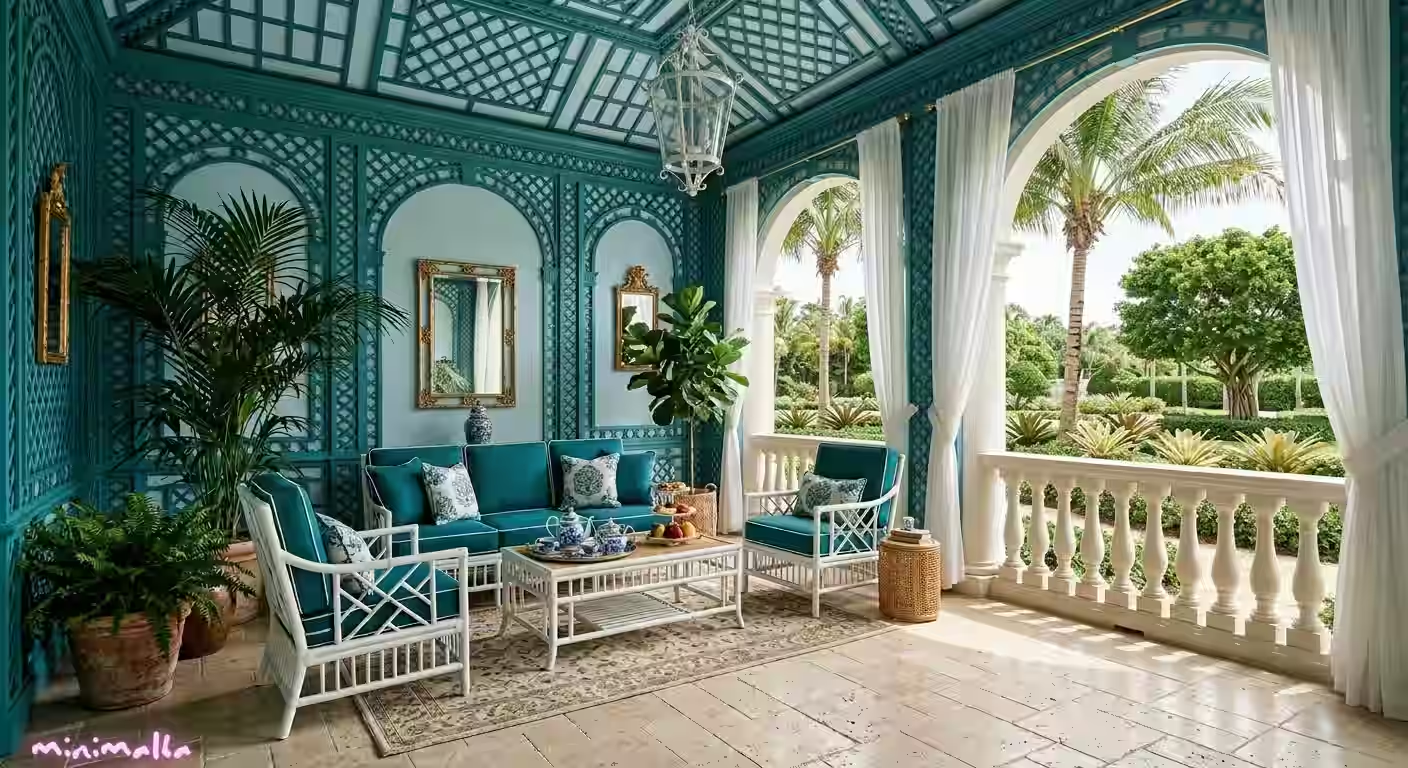
Hello Cool-Girls ! I recently stumbled upon a interior design style on Pinterest that is the exact opposite of what’s mainstream right now. It has absolutely nothing to do with “quiet luxury”, but it has an insane amount of charm. It’s true that I write a lot about timeless decor, but that doesn’t mean your interior needs to feel sterile to be durable. If maximalism is your thing, or if you’re simply looking to inject some real personality into your home, then the Palm Beach Regency style may be for you. This aesthetic gained popularity in the mid-1950s, born from the fusion of Hollywood Regency style and the relaxed, upscale Palm Beach lifestyle. We are talking about the Golden Age of Hollywood, where the opulence of the era directly translated into interior design.
The English Regency style appealed to Hollywood because of its elegant, clean lines and the grandeur of its ornamental motifs. Originally popular on the West Coast, this style was brought to Florida by architect and designer Clarence Mack. He brilliantly adapted it to the local tropical climate. Today, there is an entire world surrounding Palm Beach Regency look. I’m going to give you the keys to embrace it right now, along with a curated little selection!
As an Amazon Associate I earn a small commission from qualifying purchases. #ad #publicité
1. Color Drenching & Winter Gardens the Signature Look
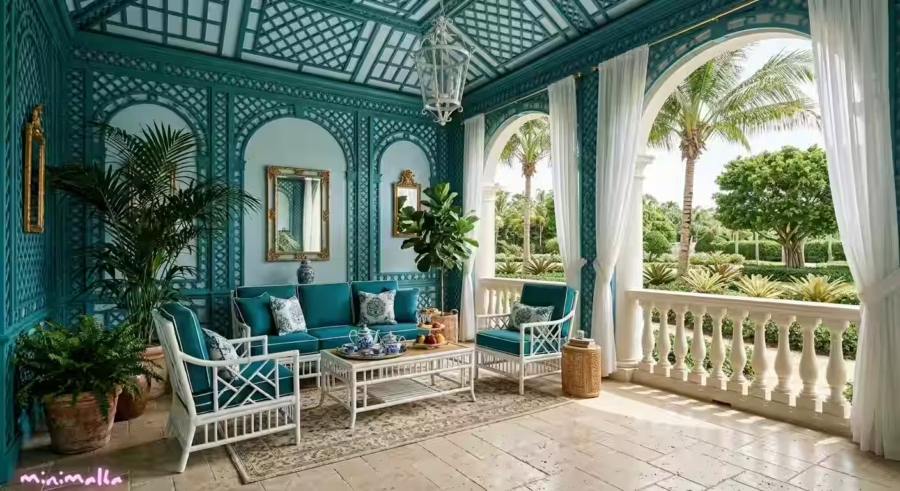
The Palm Beach indoor winter garden is the ultimate visual signature of the Palm Beach Regency style.
This architectural element is borrowed directly from the English Regency style. Winter gardens were designed to let people enjoy nature even during the coldest months. Back then, real living rooms and social spaces for afternoon tea were created inside wrought-iron greenhouses. In Florida, however, these indoor gardens had to be adapted to the tropical climate. To avoid a suffocating greenhouse effect, designers abandoned the idea of glass walls and ceilings. Instead, they created this space within a classic room or a home extension, covering both the walls and the ceiling with wooden treillage (lattice panels).
When it comes to openings, there are two main approaches. The first option is an open space, similar to a covered balcony, where the openings are framed with moldings, columns, arches or even a classical balustrade as a railing. In this configuration, sheer panels or curtains are sometimes hung to protect against the sun. If the space is enclosed, the go-to choice is arched French doors with small window panes, a beautiful nod to the glass panels of traditional English greenhouses.
Another technique frequently used in these Palm Beach winter gardens is color drenching. This method involves painting the walls, the lattice panels, and the ceiling in a single, cohesive shade, usually a vibrant pastel or an acid-toned hue (Check out my color palette in part 3 to find the best color for this technique).
Some variations play with contrast, painting the walls and the treillage in two different colors to bring more depth and character to the room.
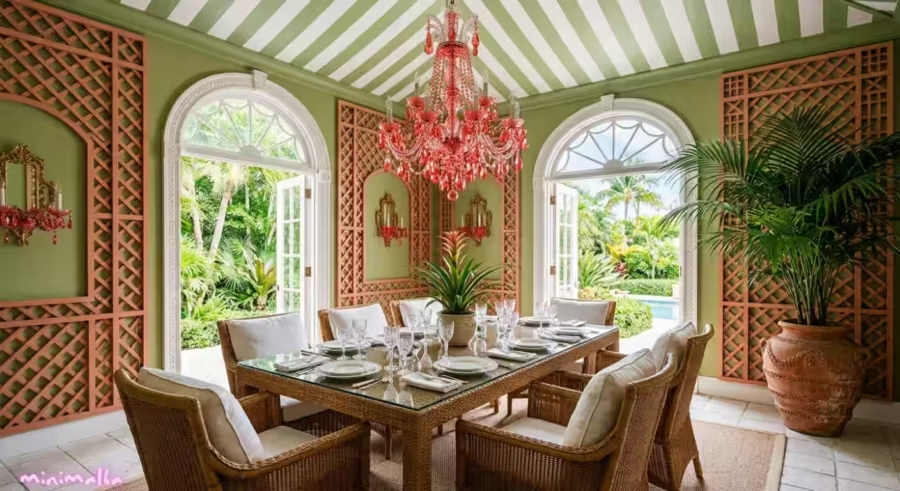
Finally, in some of the most daring spaces, the ceiling is painted with tent stripes, instantly creating a luxury beach cabana effect.
2. Palm Beach Regency : My Curated Essentials (ad)
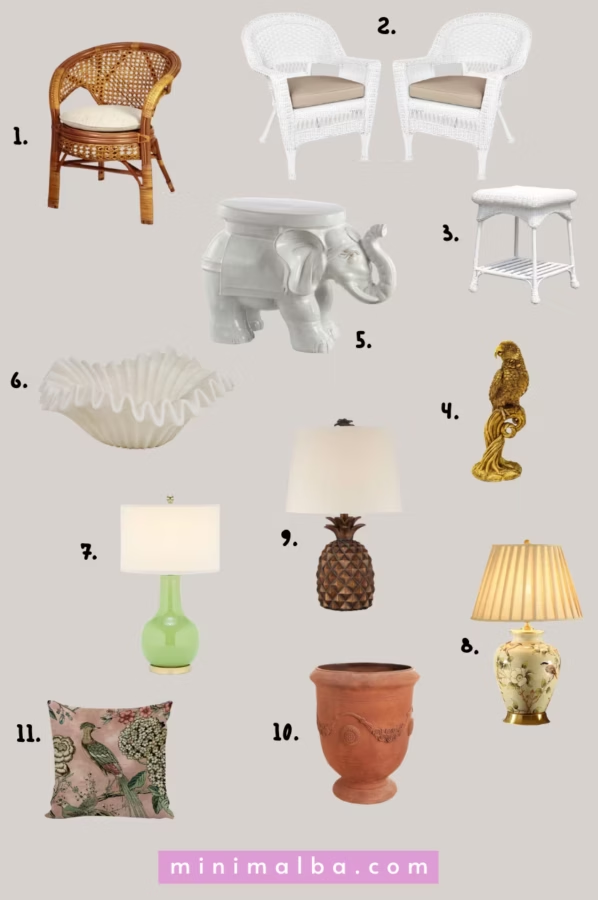
To create a Palm Beach Regency style, you need that Palm Beach vibe. First of all, you’ll find this nod to tropical weather through bamboo or rattan furniture, either in their original colors or painted white. You can find these elements in every room as accent pieces, but they are especially prominent in the living room or the famous sunroom.
1.Pelangi Handmade Rattan Dining Wicker Chair (ad)
2.Jeco Wicker Chair with Tan Cushion, Set of 2, White (ad)
3.Wicker Lane Outdoor White Wicker Patio Furniture End Table (ad)
For this tropical look, there are many references to exotic animals in these interiors, such as parrots, flamingos or elephants. They can be found in various forms, printed on textiles or wallpaper or as statues.
4.Parrot Statue for Home Decor (ad)
5.JONATHAN Y White Elephant 14.25″ Glazed Ceramic Elephant Garden Stool (ad)
The Palm Beach coastal style is also brought to life through the presence of seashells or seashell shapes, used as trinket bowls, for example.
6.Braxio White Decorative Bowl (ad)
The Palm Beach Regency style has a maximalist edge thanks to hints of Rococo flair. Featuring retro fringed sofas, unique lighting with colorful chandeliers, and table lamps with pop-art pleated shades.
Chinese porcelain is also highly prominent in this style, appearing in all shapes and sizes, from lamps and jars to simple vases and in pop colors like pink, blue,or green.
7.SAFAVIEH Lighting – Paris 27.5″ Green Ceramic Table Lamp with White Shade (ad)
8.PURESILKS Hand-Painted Ceramic Table Lamp Chinoiserie Floral Design Fabric Shade (ad)
9.Regency Hill Paget Coastal Tropical Style Accent Table Lamp (ad)
Finally, let’s not forget that the signature of Palm Beach Regency style is the winter garden, bringing a touch of exotic nature indoors is a must. For instance, you can choose textiles or wallpapers with tropical prints, like banana leaves or pineapple motifs. As for your exotic plants, there is no better way to showcase them than in urn-shaped terracotta pots.
10.Worth Garden Large Urn Planter (ad)
11. ArogGeld Thibaut Villeneuve Manor Blush Cushion Cover (ad)
3. Create a pastel and vibrant color palette
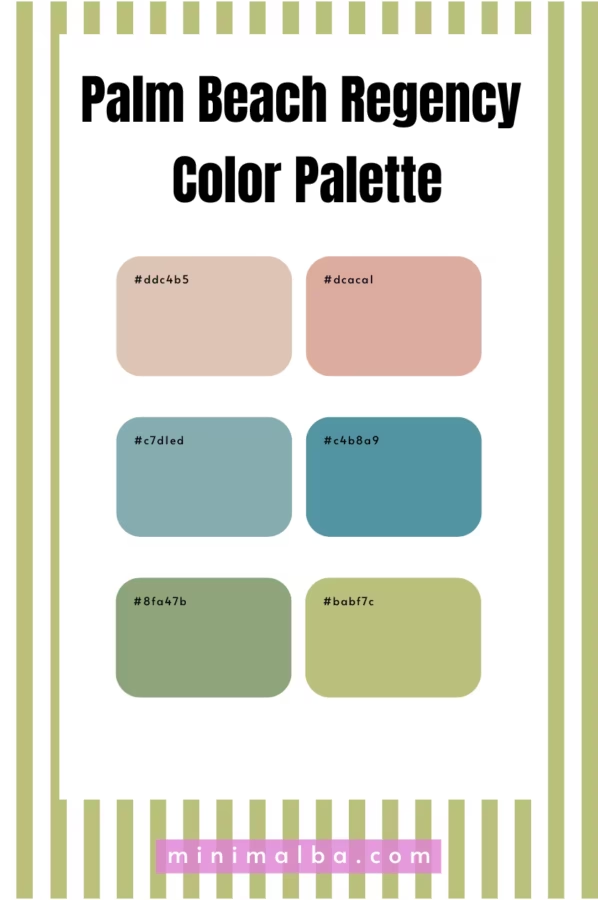
The color palette of the Palm Beach Regency style is quite well-defined, featuring the same signature pastel and citrus tones.
It incorporates many shades of green to evoke tropical vegetation, ranging from pear green to light olive.
This green pairs beautifully with a color rarely seen in interior design, yet creating a surprisingly harmonious match: dusty rose and rosy beige. These two colors can be found on walls to contrast with a green wooden treillage or used as upholstery fabric for an entire sofa.
Finally, you can’t talk about coastal decor without touches of blue. I have selected two shades that evoke the tropical sea rather than the coast of the northern US: a deep turquoise and a frosted light turquoise.
4. The Nod to the Regency Era
English Regency influences aren’t just limited to the balcony, but that doesn’t mean you should overcrowd your interior. The Palm Beach Regency style can be tricky to master because while it is maximalist, it still requires balance.
To start making it your own, I recommend beginning with a “neutral” cream or white base and adding Regency touches, just like on the balcony, as well as through architectural details.
For instance, in just two rooms of your choice, such as the living room and the bedroom, you can adorn the walls with molding.
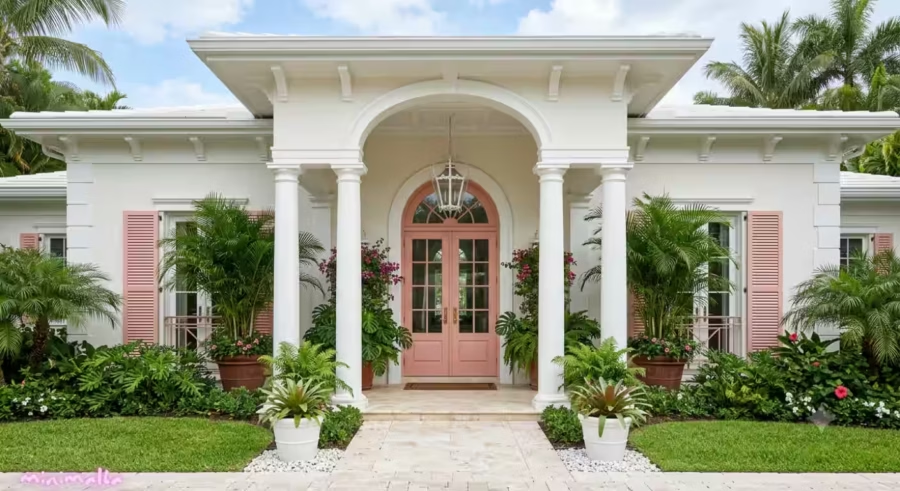
If you own your home, you could also place two columns on either side of your front door.
5. Bring tropical vegetation into your living room
If you have a green thumb or are a plant lover, then this section is for you! To get that Palm Beach vibe, you don’t necessarily need to buy new furniture: you can simply bring nature right into your home. Indoor palms, like Kentia or Areca palms, are very common in the region and are easy to care for. They will have plenty of room to thrive in your dining room or in a beautiful winter garden.
For a touch of originality and a pop of color, I suggest a guzmania. You can place it in a smaller space, such as on a console table in your entryway, or in your bathroom to add a breath of fresh air (it loves humidity!).
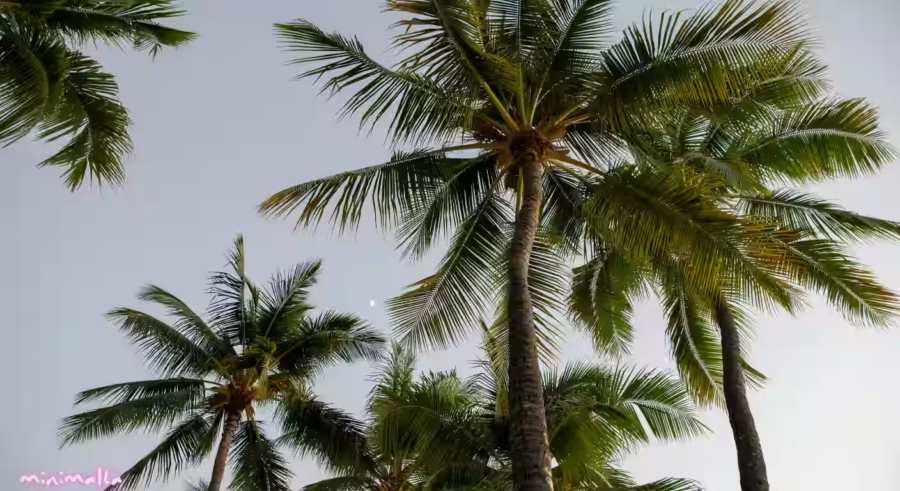
As for flowers, I suggest potting some orchids or the iconic hibiscus. However, you should avoid the latter if you have pets, as it can be dangerous if ingested in large quantities. The orchid will beautifully decorate your living room coffee table or any sunny room. The hibiscus, on the other hand, will need more light, making a sunroom or a balcony the perfect spot, just make sure to protect it during periods of extreme heat !